
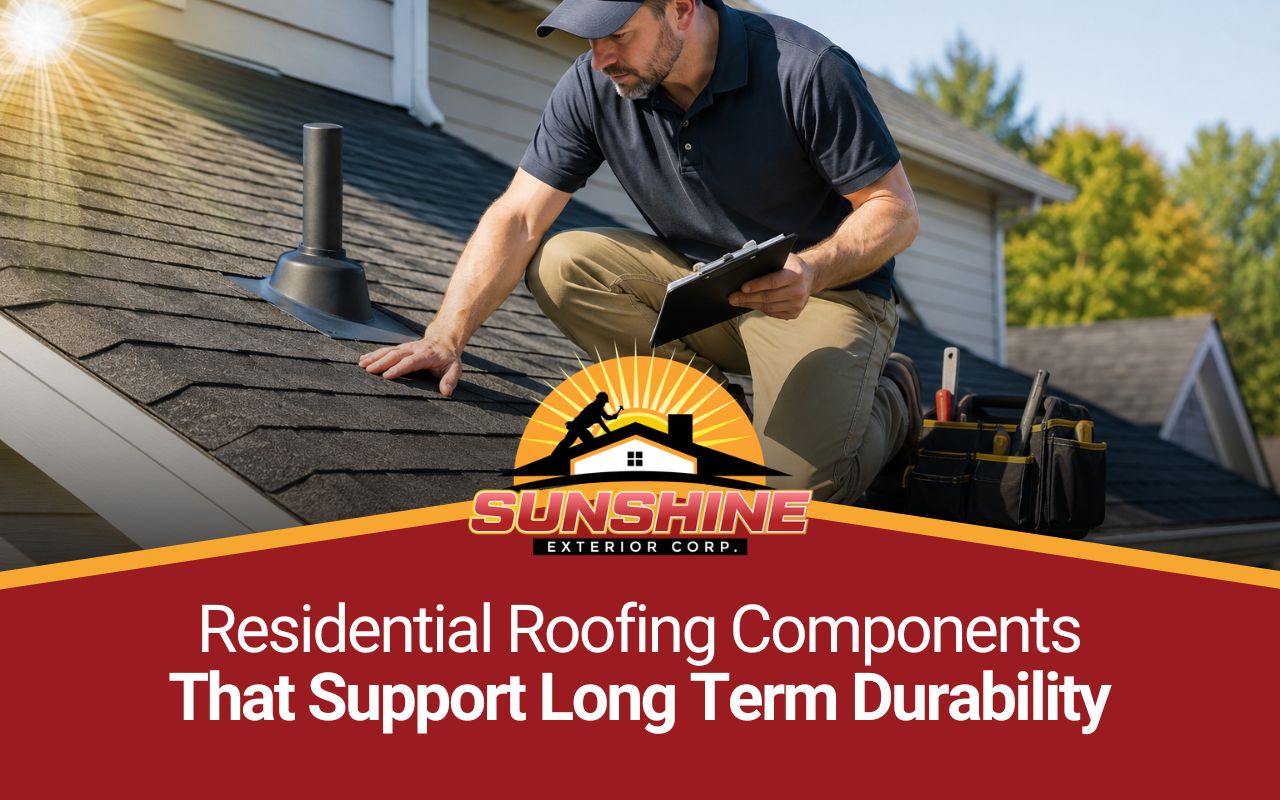
Residential Roofing Components That Support Long Term Durability
Residential roofing components work together to protect your home from rain, wind, snow, and daily weather changes. Each layer has a clear job, so choosing the right parts can help your roof last longer and stay safer.
At Sunshine Exterior Corp, we believe a strong roof starts with simple choices made the right way. That includes good materials, careful placement, and clear guidance before any work begins.
Hidden Roof Layers That Support Long Lasting Protection
Residential roofing components include more than shingles. The hidden layers below the surface often decide how well your roof handles moisture, heat, and storms over time.
Roof underlayment and flashing are two of the most important parts. They help stop water before it reaches the wood below, especially near edges, valleys, vents, and chimneys.
Underlayment adds a backup layer beneath shingles.
Flashing guides water away from weak roof areas.
Clean installation helps every part work together.
Roof Underlayment Matters Beneath Your Shingles
Residential roofing components need underlayment because shingles alone may not stop every leak. Underlayment sits between the roof deck and the outer roof surface, giving your home added protection.
This layer is very helpful during heavy rain or snow. It also reduces the risk of wood damage when moisture moves under loose, cracked, or lifted shingles.
Choosing Underlayment Materials For Local Weather Conditions
Felt underlayment is a common choice for many homes. It has been used for years and can work well on simple roofs in mild weather areas.
However, synthetic underlayment is often lighter and stronger. It can resist tearing better and may handle wet conditions more reliably. Our team at Sunshine Exterior Corp explains these options clearly before work begins.
Felt may fit basic roof needs.
Synthetic materials can offer stronger moisture defense.
Local weather should guide the final choice.
Flashing Details That Help Stop Roof Leaks
Residential roofing components also depend on flashing. Flashing is usually placed where water could enter, such as around chimneys, skylights, wall joints, and roof valleys.
When installed well, flashing moves water away from these sensitive areas. As a result, your roof has a better chance of staying dry during storms and seasonal changes.
Matching Flashing Materials With Your Roofing System
Different flashing materials offer different benefits. Galvanized steel is strong, while aluminum is light and resists rust in many conditions. Copper and stainless steel can also last for many years.
Because every roof is different, the right material should match the home, climate, and nearby roof parts. Through our exterior service options, we help homeowners plan practical upgrades.
Steel offers strength for many roof areas.
Aluminum can work well in damp locations.
Copper gives long life with a classic look.
Installation Steps That Keep Roofing Parts Working
Residential roofing components must be installed in the right order. Underlayment should be laid on a clean and dry roof deck, starting near the lower edge and moving upward.
Flashing should overlap correctly so water flows down and away. When customers contact Sunshine Exterior Corp, we explain how details like sealing, fastening, and overlap affect roof performance.
Frequently Asked Questions
What does roof underlayment do?
Roof underlayment adds a second layer of protection beneath shingles. It helps reduce leaks when water gets past the top roof layer.
Where is flashing usually installed?
Flashing is placed near chimneys, vents, valleys, skylights, and wall joints. These areas need extra water control.
How often should roof parts be checked?
Most homeowners should check the roof after strong storms and at least twice a year. Early checks can prevent larger damage.
Can damaged flashing cause interior leaks?
Yes, damaged flashing can let water enter weak roof areas. This may lead to stains, wood damage, or indoor moisture issues.
How can I request roofing guidance?
You can reach our team through the contact page for clear next steps and helpful support.
Simple Maintenance Habits For A Stronger Roof
Residential roofing components last longer when small problems are handled early. Keep gutters clean, remove leaves from valleys, and look for loose flashing or missing shingles after bad weather.
With Sunshine Exterior Corp, you get practical guidance for protecting your roof over time. You can also visit our home page, learn about our Stoughton roofing support, or view our Plymouth roofing support.